A living room is much more than just a place to sit and relax. It is where families come together, entertain friends and express their personal style. Thoughtful luxury living room interior design can make the space feel inviting, visually balanced and comfortable for everyday living.
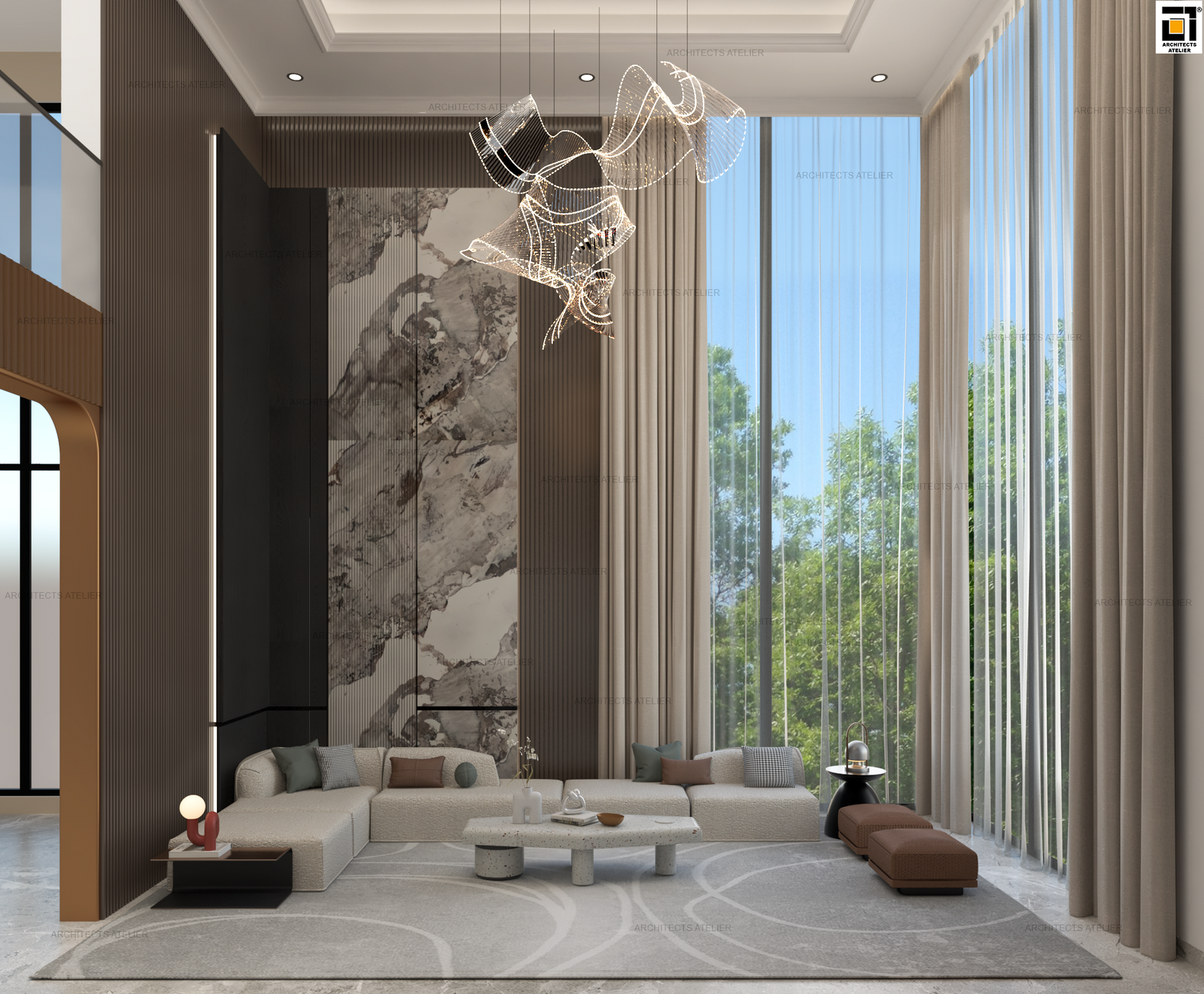
This contemporary living room design combines warm neutral colours, a dramatic marble feature wall, textured vertical panelling and a sculptural chandelier. Floor-to-ceiling windows bring in natural light, while a large sectional sofa and carefully selected furnishings create a relaxing atmosphere.
For homeowners planning a modern residence, working with experienced Architects in Greater Noida can help bring architectural planning and interior design together. From selecting suitable materials to creating functional layouts, professional design guidance helps balance aesthetics and everyday needs. Explore Architects Atelier to learn more about architectural design services and residential projects.
About the Design: A Contemporary Luxury Living Room
The interior is decorated with a soft neutral palette and dark wood-toned panelling, expressive marble surfaces and carefully chosen decorative elements. The large sectional sofa provides a comfortable seating arrangement, and the central coffee table helps keep the layout practical and visually uncluttered.
A sculptural pendant light is a statement feature above the seating area. The tall windows and full-length curtains emphasise the room’s vertical proportions and provide flexibility in controlling daylight and privacy.
The design is not about over-decoration but contrasting textures, subtle colours and carefully placed lighting to create an elegant atmosphere.
For homeowners exploring Architects Atelier’s architectural project categories, this concept offers inspiration for integrating interior aesthetics with the broader design of a home.
1. Marble Feature Walls That Create a Focal Point
A marble-effect feature wall is one of the living room’s most striking features. The veining is very natural looking and adds movement and texture and contrasts nicely with the darker vertical panelling to either side.
It can also help to define the main seating area and give the room a unique visual identity. Depending on the budget and design requirements, the homeowner may opt for natural marble, engineered surfaces or other suitable decorative finishes.
In the choice, one should take into account appearance, installation requirements, maintenance and durability. Balanced lighting can also help to highlight the surface without too much glare.
The trick is to let the feature wall work in conjunction with the furniture and other finishes in the room, not compete with every other element.
2. Layered Lighting and a Sculptural Chandelier
Lighting contributes significantly to the atmosphere of a contemporary living room. In this concept, the sculptural chandelier acts as a visual centrepiece, while recessed ceiling lights provide additional illumination.
A well-planned lighting scheme typically combines three elements:
- Ambient lighting: Provides general illumination throughout the room.
- Accent lighting: Highlights architectural details, artwork or selected wall finishes.
- Task lighting: Supports activities such as reading, working or other focused tasks.
Using dimmable lighting and separate controls where appropriate can help homeowners adjust the atmosphere for different occasions.
The scale and position of decorative lighting should also be coordinated with the ceiling height, furniture arrangement and circulation paths.
3. Floor-to-Ceiling Windows and Soft Window Treatments
The generous glazing gives a visual link to the outside greenery, and gives an open feeling to the room. Tall curtains emphasise the height of the space and light filtering or sheer treatments can soften daylighting.
The window design should consider the orientation of the room, privacy, glare and solar heat gain. In hotter climates, appropriate glazing, shading and curtain specifications can assist with indoor comfort.
Curtains also help to define the acoustic character and appearance of the room. Matching colours and textures to the upholstery, flooring and wall finishes can make the interior feel more cohesive.
With careful planning, windows and window treatments can serve both visual design and practical purposes in the home.
4. Neutral Colours and Comfortable Contemporary Furniture
The beige sectional sofa, muted cushions and understated coffee table gave a calm visual base. Small accents in darker brown and in muted green add contrast but retain the overall palette.
Even neutral interiors can be visually interesting when you mix textures thoughtfully. Upholstery, wood finishing, stone surfaces, soft furnishings and rugs all have a different tactile quality.
The location of the furniture is equally important. You can use a sectional sofa to define the main seating area, with side tables and a coffee table that are the right size for everyday use.
When choosing furniture, homeowners should consider circulation space, seating needs, room size and cleaning requirements. A visually pleasing layout should allow people to move around comfortably.
5. Textured Panelling and Ceiling Details
The vertical wall panelling gives the interior rhythm and depth. Its darker tone contrasts with the marble surface, and helps frame the seating area.
The layered ceiling and recessed lighting are another architectural detail in the room which gives it a more finished feel. If coordinated with the ceiling height and technical requirements such features can be used to hide some lighting elements and visually organise a big space.
The materials need to be consistent. Repeating a few select finishes on walls, furniture and decorative details can create a coordinated interior without making the room feel monotonous.
The best results are obtained with a balance of visual interest, simplicity and practical maintenance.
Key Design Highlights
- Marble feature wall: Establishes a distinctive focal point.
- Sculptural chandelier: Adds decorative character and visual interest.
- Floor-to-ceiling glazing: Connects the interior with outdoor views.
- Neutral sectional sofa: Creates a comfortable and welcoming seating zone.
- Vertical wall panelling: Adds texture and visual depth.
- Layered lighting: Supports different activities and moods.
- Coordinated finishes: Bring together the furniture, walls, ceiling and flooring.
How Can You Plan a Luxury Living Room Interior?
Before finalising a living room design, consider the dimensions of the space, household requirements and the way the room will be used.
- Define the layout: Position the seating, tables and circulation routes before choosing decorative elements.
- Select a cohesive palette: Choose complementary colours and materials for walls, furniture, flooring and curtains.
- Plan lighting early: Coordinate ambient, task and accent lighting with the ceiling and furniture layout.
- Consider natural light: Evaluate window orientation, privacy, glare and heat control.
- Choose suitable materials: Balance visual appeal with durability, maintenance and budget.
- Coordinate the interior with the home: Ensure the living room complements the architecture and style of the adjoining spaces.
Working with an experienced design team can help homeowners coordinate these decisions and create an interior that reflects their preferences while remaining functional.
Explore Architects Atelier to learn more about the practice and its approach to architectural design.
Frequently Asked Questions
Luxury living room design often combines carefully selected materials, comfortable furniture, layered lighting, coordinated colours and a well-planned layout. The result should feel refined while supporting everyday use.
Beige, cream, warm grey and other neutral shades provide a versatile foundation. Wood tones, muted green and darker accents can introduce contrast without overwhelming the space.
Marble and marble-effect surfaces can create a strong focal point in contemporary interiors. The right choice depends on budget, maintenance requirements, installation conditions and the desired appearance.
Review relevant residential projects, design experience, planning capabilities, material knowledge and technical coordination. Discuss your requirements, budget and site conditions before finalising the design approach.
Natural light can make interiors feel more open and visually connected to their surroundings. Window orientation, glazing specifications, shading and window treatments should be considered to manage glare, privacy and heat.
Conclusion
Luxury living room interior design is most successful when visual elegance and everyday comfort work together. This contemporary concept demonstrates how a marble feature wall, sculptural lighting, textured panelling and neutral furniture can create a cohesive and welcoming space.
The final design should also respond to the room’s proportions, daylight conditions, maintenance requirements and the needs of its occupants. Thoughtful planning helps ensure that every material and design feature serves a clear purpose.
Architects Atelier can be explored by homeowners seeking architectural design inspiration for contemporary residences. Visit Architects Atelier to learn more about the practice.
Planning a modern home in Noida or Greater Noida? Contact Architects Atelier to discuss your residential design requirements.